

Most organizations today face increasing threats from cyberattacks, rendering traditional security measures inadequate. You need to understand that Zero Trust Network Access (ZTNA) adopts a philosophy of never trusting and always verifying, ensuring your network is secure against unauthorized access, even from internal users. This approach addresses the vulnerabilities of remote work and cloud services by requiring strict identity verification for every device and user, safeguarding your sensitive data from potential breaches. As cyber threats become more sophisticated, adopting ZTNA is vital to protect your organization from evolving risks.
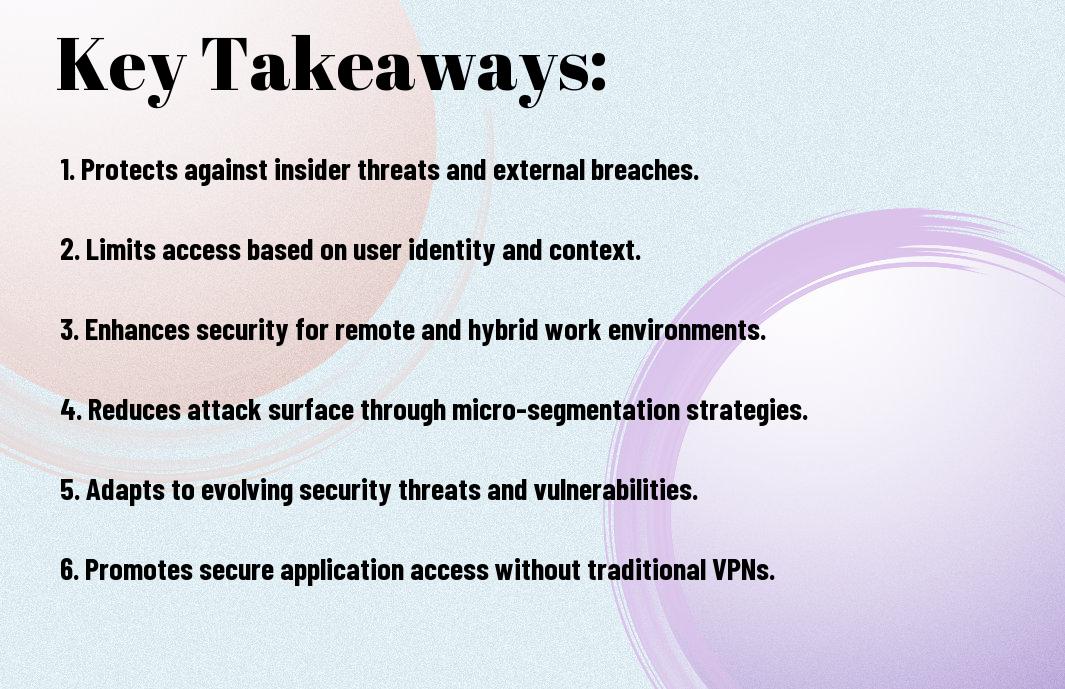
Key Takeaways:
- ZTNA enhances security by verifying user identities and device integrity before granting access, reducing the risk of unauthorized entry to sensitive data and systems.
- Implementing ZTNA allows organizations to minimize their attack surface, as it involves continuous monitoring and adaptive security measures that adjust based on user behavior and context.
- With remote work becoming increasingly common, ZTNA supports secure access for a distributed workforce, ensuring that security protocols are maintained regardless of location.
Understanding Zero Trust Network Access
Your organization’s security framework must evolve to combat modern threats. Zero Trust Network Access (ZTNA) offers a fresh approach by eliminating the traditional security perimeter and verifying every user and device before granting access to critical resources. Emphasizing the principle of “never trust, always verify,” ZTNA ensures that only authenticated users can interact with vital data, whether they are inside or outside the network.
Definition of ZTNA
Any network security model that requires strict identity verification for every individual and device attempting to access resources on a private network is classified as Zero Trust Network Access (ZTNA). This approach assumes that threats can exist both inside and outside the network, advocating for continuous verification and minimal trust.
Evolution of Cybersecurity Models
Behind the evolving landscape of cybersecurity is the growing recognition of diverse threats and vulnerabilities. As organizations transitioned from traditional perimeter-based security to more dynamic systems, the need for adaptive security measures became evident. Traditional models often relied on the belief that once inside the network, access was safe, which created significant security gaps. In contrast, ZTNA’s framework remedies this by applying robust authentication policies and contextual access controls, enabling organizations to stay ahead of threats.
But the shift to ZTNA represents more than just a change in technology; it’s a fundamental rethinking of security paradigms. As cyber threats become increasingly sophisticated, a model that incorporates continuous verification is vital. Traditional methods may provide a false sense of security; however, ZTNA actively reduces risks by enforcing privileges based on verified identity, device posture, and behavioral context. By integrating ZTNA, you can significantly enhance your organization’s defense against potential cyberattacks, ensuring robust protection of your sensitive information.
Key Principles of Zero Trust
Clearly, Zero Trust is built on several foundational principles that aim to enhance your cybersecurity posture. These principles include the assumption that threats can originate both from inside and outside your network, strong identity verification measures, and strict access controls based on user roles. By adhering to these principles, you can better safeguard your organization’s sensitive data from potential breaches and malicious activities.
Least Privilege Access
Trust is a concept you can no longer afford in today’s security landscape; instead, implementing least privilege access is necessary. This principle ensures that users only have the minimum level of access necessary to perform their job functions. By limiting permissions, you significantly reduce the attack surface, making it more challenging for unauthorized individuals to exploit system vulnerabilities.
Continuous Verification
Zero Trust operates on the principle of continuous verification, which means that you must constantly validate user identities and access rights. This ongoing assessment is vital in detecting any anomalies or potential threats swiftly.
A strong continuous verification strategy enables your organization to adapt to evolving security risks. By regularly evaluating user activities, you can quickly identify suspicious behaviors and respond before any damage is inflicted. Implementing technologies such as real-time analytics and adaptive authentication helps ensure that access is constantly monitored and unauthorized activities are flagged immediately. This proactive approach not only fortifies your defenses but also enhances your overall organizational resilience.
Benefits of Implementing ZTNA
Once again, adopting ZTNA revolutionizes your cybersecurity strategy by not only enhancing overall security but also streamlining access management and compliance requirements. By minimizing your attack surface, implementing a Zero Trust framework empowers your organization to safeguard sensitive data while allowing secure access to authorized users, no matter where they are located.
Enhanced Security Posture
At the heart of ZTNA is a robust security posture that continuously verifies user identities and device health. This allows you to mitigate risks associated with insider threats, data breaches, and unauthorized access, ultimately fostering a safer digital environment for your organization.
Improved Compliance
One of the significant advantages of ZTNA is the enhanced ability to meet compliance requirements set by various regulations. As you implement ZTNA, you establish more stringent controls over data access and usage, which not only ensures sensitive information is well-protected but also provides documentation and monitoring capabilities that make compliance audits simpler and more efficient.
Posture compliance with ZTNA means you’re not just meeting regulatory standards but actively working toward safeguarding your organization’s data integrity. With features such as real-time monitoring and automated reporting, you can quickly identify and address compliance gaps, thus reducing your risk of penalties and enhancing your organization’s reputation in the industry.
ZTNA vs. Traditional VPN
To compare Zero Trust Network Access (ZTNA) with traditional Virtual Private Networks (VPNs), it’s important to note that ZTNA offers a modern security approach designed for the evolving digital landscape. While VPNs allow secure connections to internal networks, they often grant broader access than necessary. In contrast, ZTNA employs strict access controls based on user identity, device health, and contextual factors, ensuring only the right users have access to specific applications and resources.
Limitations of VPNs
Any organization relying on traditional VPNs faces several limitations, including a lack of visibility into user activities and increased vulnerability to insider threats. VPNs often establish a perimeter-based security model, meaning once users connect, they have access to the entire network. This can lead to potential data breaches if credentials are compromised, allowing attackers easy access to sensitive information.
Advantages of ZTNA
With ZTNA, you benefit from a more granular security approach that emphasizes user authentication and continuous verification. This not only reduces the attack surface but also enhances protection for your sensitive data and applications by allowing access based solely on trust levels.
Understanding the advantages of ZTNA, you can appreciate its role in modern cybersecurity. It provides a dynamic access control system that continually evaluates user permissions based on contextual factors such as location, device security, and user behavior. Such a method gives you enhanced security posture as it minimizes the risk of unauthorized access. Additionally, ZTNA supports remote work by securely connecting you to applications without exposing your entire network, which is important for maintaining data integrity in today’s ever-changing business landscape.

Real-World Applications of ZTNA
Not every organization understands how to leverage Zero Trust Network Access to enhance their cybersecurity posture. Adopting ZTNA can transform your network security, making it more resilient against breaches by ensuring only authorized users and devices gain access to sensitive information.
Case Studies
On numerous occasions, organizations have effectively implemented ZTNA to strengthen their cybersecurity measures. Consider these notable case studies:
- Company A: Reduced data breach incidents by 30% within the first year of ZTNA deployment.
- Company B: Improved remote worker security compliance from 50% to 95% using ZTNA.
- Company C: Achieved a 40% decrease in unauthorized access attempts after integrating ZTNA.
- Company D: Ensured a 70% reduction in security monitoring costs through ZTNA automation.
Industry Adoption
Studies indicate that various industries are recognizing the advantages of incorporating ZTNA into their cybersecurity frameworks. From finance to healthcare, sectors that handle sensitive data are prioritizing ZTN-A for its ability to limit exposure and enhance security.
Another imperative aspect to note is that industries are rapidly embracing ZTNA, often leading to significant cost savings and enhanced data protection. In fields such as healthcare, organizations are mitigating risks associated with patient data breaches by utilizing ZTNA frameworks. For the financial sector, ZTNA minimizes exposure to fraudulent transactions, significantly bolstering overall resilience. By shifting to ZTNA, you ensure that your organization’s approach to cybersecurity aligns with current threats, allowing for responsive, real-time adaptations in a dynamically evolving landscape.

Challenges in ZTNA Implementation
For many organizations, implementing Zero Trust Network Access (ZTNA) poses several complexities due to its specific architecture and policies. Transitioning from traditional models requires a shift in mindset, understanding all the nuances of What is Zero Trust? – Guide to Zero Trust Security, and careful planning to align existing systems with ZTNA principles. Your organization must address both technical obstacles and resistance to change to fully realize the benefits of this security model.
Technical Barriers
Below the surface, technical barriers can hinder your ZTNA implementation. Complexities in current IT infrastructure, integration challenges with legacy systems, and ensuring seamless user experiences are significant hurdles that demand expert knowledge and resources to navigate effectively.
Organizational Resistance
By understanding organizational resistance, you can address another critical challenge in ZTNA implementation. Employees may resist new protocols due to concerns about increased workloads, shifting responsibilities, or the learning curve of new technologies.
Barriers to ZTNA adoption often stem from fear of the unknown and discomfort with change within your organization. Employees might view the new system as an added burden instead of an opportunity for enhanced security and streamlined processes. Communicating the advantages of ZTNA, such as improved data protection and better access control, can motivate your team to embrace these changes. Prioritizing training and support will also help reduce resistance, making your ZTNA journey smoother.
To wrap up
Now, as you navigate the complexities of today’s cybersecurity landscape, embracing Zero Trust Network Access (ZTNA) is vital for safeguarding your organization. This approach ensures that every access request is carefully evaluated, reducing the risk of data breaches and enhancing your overall security posture. By implementing ZTNA, you can better protect sensitive information and maintain compliance with evolving regulations. To deepen your understanding of this imperative security framework, explore more about Why Zero Trust Network Access (ZTNA) is Essential for ….
Q: What is Zero Trust Network Access (ZTNA) and how does it differ from traditional cybersecurity models?
A: Zero Trust Network Access (ZTNA) is a security framework that requires strict verification for every user and device attempting to access resources in a network, regardless of whether they are inside or outside the organization’s perimeter. Unlike traditional cybersecurity models, which often trust users and devices within the network perimeter, ZTNA operates on the principle of “never trust, always verify.” This means that every request for access undergoes continuous authentication, and security measures are applied at the application layer rather than relying solely on network perimeter security.
Q: Why is adopting a Zero Trust approach beneficial for organizations dealing with remote work and cloud services?
A: The shift towards remote work and the increased reliance on cloud services have expanded the attack surface for many organizations. A Zero Trust approach allows organizations to maintain security by ensuring that even remote users and devices are subject to the same stringent security checks as those within the network. With ZTNA, organizations can enforce access controls based on user identity, device security posture, and the context of access requests, thereby minimizing the risks of unauthorized access and data breaches associated with remote and cloud environments.
Q: How does ZTNA enhance data protection against evolving cyber threats?
A: ZTNA enhances data protection by implementing granular access controls that limit user privileges to only what is necessary for their role. This principle of least privilege reduces the potential impact of a compromised account. Additionally, because ZTNA continuously monitors user behavior and access requests, it can detect and respond to anomalies in real-time, thereby providing a proactive security posture against evolving cyber threats. By using advanced analytics and threat intelligence, organizations can significantly improve their defenses against sophisticated attacks, ensuring that critical data remains protected.