

Many individuals and organizations underestimate the role of encryption in their cybersecurity and IT support strategy. As cyber threats become increasingly sophisticated, ensuring that your sensitive data is protected through encryption can be the difference between security and a data breach. By implementing robust encryption methods, you not only safeguard your information but also enhance your overall resilience against attacks. Understanding how to effectively utilize encryption tools is vital for maintaining the integrity of your data and building trust with your clients and stakeholders.

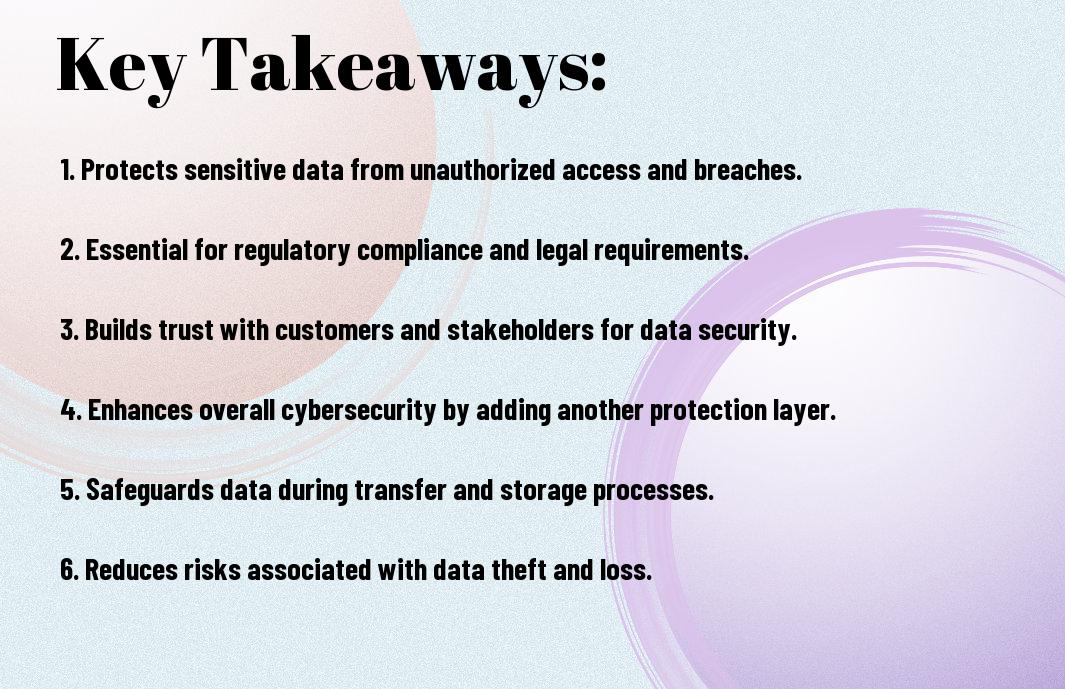
Key Takeaways:
- Encryption serves as a fundamental layer of protection for sensitive data, ensuring that information remains confidential even if intercepted by unauthorized parties.
- Implementing strong encryption techniques not only safeguards data at rest and in transit but also helps organizations comply with various regulatory requirements regarding data protection.
- Regularly updating encryption protocols and maintaining a robust IT support strategy are crucial in adapting to evolving cyber threats and ensuring ongoing data security.
Understanding Encryption
To effectively safeguard your data in today’s digital landscape, understanding encryption is crucial. This technology uses mathematical algorithms to transform information into an unreadable format unless one has the decryption key. Implementing strong encryption methods ensures that sensitive data remains secure from unauthorized access.
What is Encryption?
Among the various cybersecurity measures, encryption stands out as a primary defense that converts readable data into a coded format, accessible only to authorized users. This process is vital for protecting sensitive information such as personal data, financial records, and confidential communications. By utilizing encryption, you enhance your security posture significantly.
Types of Encryption Algorithms
The types of encryption algorithms vary in complexity and application, but they generally fall into two main categories: symmetrical encryption and asymmetrical encryption. Both algorithms play a role in securing your data, and understanding their differences is important for effective implementation.
| Type | Description |
| Symmetric | Uses the same key for encryption and decryption |
| Asymmetric | Uses a pair of keys; one for encryption, one for decryption |
| Block Cipher | Encrypts data in fixed-size blocks |
| Stream Cipher | Encrypts data one bit or byte at a time |
| Hash Functions | Transforms data into a fixed-size string of characters |
To ensure the best security strategy, you should consider the various types of algorithms available, as they each offer unique benefits. The use of symmetrical algorithms is fast and efficient for large amounts of data, while asymmetrical algorithms provide a robust level of security despite being slower. Understanding these differences allows you to select the appropriate method based on your specific security needs.
- Symmetric – fast, uses the same key
- Asymmetric – robust, requires key pairs
- Block Cipher – handles data in blocks
- Stream Cipher – processes data bit by bit
- Hash Functions – creates fixed-length representations
The knowledge of these algorithms enhances your capacity to protect critical data efficiently and effectively.
The Role of Encryption in Cybersecurity
Even with advanced security measures in place, data breaches remain a persistent threat. This is where encryption plays a vital role in your cybersecurity strategy, converting sensitive information into unreadable code for unauthorized users. By implementing robust encryption practices, you ensure that your critical data is protected from cybercriminals, thereby enhancing the overall security of your IT support strategy.
Protecting Data at Rest
Rest assured, securing data at rest is necessary for safeguarding sensitive information stored on various devices and servers. Encryption acts as a shield, ensuring that even if attackers gain physical access to your storage systems, they cannot decipher the encrypted data without the appropriate keys. This layer of security significantly mitigates the risk of data exposure.
Securing Data in Transit
Behind every successful organization lies the need to secure data in transit, as information often flows through various networks and communication channels. Implementing encryption during data transmission safeguards against interception by unauthorized parties, keeping your information confidential and intact.
Also, when you encrypt data in transit, you utilize protocols such as SSL/TLS that create a secure connection between servers and clients, providing an additional layer of security against potential threats. This ensures that your sensitive information, such as personal details and financial data, remains confidential during transfer. Failing to secure your data in transit can lead to catastrophic consequences, including data breaches and loss of customer trust. By prioritizing encryption, you enhance your organization’s resilience against cyber threats and instill confidence in your stakeholders.
Encryption in IT Support Strategy
Your IT support strategy must include encryption to safeguard sensitive information and comply with regulatory standards. By integrating encryption, you establish a strong defense against data breaches and unauthorized access, ensuring that your clients’ data remains confidential and secure. You can mitigate risks and build trust, demonstrating your commitment to robust cybersecurity practices.
Integrating Encryption into IT Policies
Below are key considerations when integrating encryption into your IT policies. Ensure that all sensitive data, whether at rest or in transit, is encrypted using strong algorithms. Regularly review and update your policies to align with industry best practices and compliance requirements. Training your employees on encryption protocols will enhance your organization’s overall security posture.
Best Practices for Encryption Management
Support your organization’s security strategy by implementing best practices for encryption management. Schedule regular audits to ensure encryption methods are up-to-date and effective. Utilize key management solutions to safely handle, store, and distribute encryption keys. Additionally, actively monitor your encryption practices and establish protocols to immediately address any vulnerabilities.
For instance, conducting regular audits of your encryption processes can help you identify potential weaknesses and ensure compliance with regulations. Utilizing robust key management solutions is necessary to prevent unauthorized access to encryption keys. Additionally, providing training for employees on encryption best practices promotes security awareness, ultimately reducing the chance of human error. By adhering to these best practices, you enhance your organization’s defense against digital threats.

Legal and Compliance Considerations
Unlike many aspects of IT security, the legal and compliance requirements surrounding encryption are often mandatory. Organizations must ensure they adhere to regulations that govern data protection to avoid legal repercussions. As you develop your cybersecurity strategy, consider how encryption fits into these regulatory frameworks to both protect your sensitive information and fulfill your obligations.
Encryption and Data Protection Regulations
Against the backdrop of increasing data breaches, various data protection regulations mandate the use of encryption to safeguard personal and sensitive information. Compliance with frameworks such as GDPR or HIPAA can dictate that you implement encryption not only as a best practice but as a legal requirement, ensuring you protect data effectively and avoid severe penalties.
Consequences of Non-compliance
To put it bluntly, failing to comply with data protection regulations can lead to significant fallout for your organization. This includes hefty fines that can reach into the millions, litigation costs, and irreversible damage to your reputation in the marketplace.
And in addition to monetary penalties, the ramifications don’t end there. Your organization could face loss of customer trust, impacting your bottom line and growth potential. Moreover, a lack of proper encryption may expose you to increased cybersecurity threats, placing your sensitive data at risk. The long-term consequences of non-compliance can be detrimental, making the need for a robust encryption strategy within your IT support framework all the more necessary.
Challenges and Limitations of Encryption
For anyone managing cybersecurity, understanding the Importance of Encryption for Cybersecurity is vital. However, encryption does come with challenges and limitations that can affect its effectiveness in your IT support strategy. Issues like key management, performance impacts, and potential vulnerabilities must be carefully navigated to ensure your data remains protected and efficient.
Performance Impacts
Above all, implementing encryption can lead to performance impacts on system resources. When data is encrypted, it requires additional processing power for both the encryption and decryption processes, which may slow down transaction speeds. As a result, you must balance the desire for data security with the performance needs of your systems.
Managing Encryption Keys
After implementing encryption, effective management of encryption keys is crucial to maintain the integrity of your security measures. Poor key management can lead to unauthorized access or, even worse, permanent data loss should keys become unmanageable.
With effective key management, you can establish a robust system for generating, storing, and rotating your encryption keys. Developing a comprehensive policy that includes regular audits and access control measures is imperative for protecting your keys. Additionally, consider utilizing automated key management solutions to minimize human error, which is often the largest threat to data integrity. By prioritizing these aspects, your encryption strategy will not only remain secure but also operationally effective.
Future Trends in Encryption
Many organizations are beginning to realize the necessity of encryption as cyber threats continue to evolve. In the future, strategies will encompass advanced encryption techniques that protect sensitive data while maintaining usability. You should stay informed about these trends to ensure your cybersecurity measures remain robust and effective, staying one step ahead of potential breaches.
Emerging Encryption Technologies
Across the tech landscape, you can expect to see emerging encryption technologies designed to enhance security further. Innovations such as homomorphic encryption and advanced key management systems are becoming increasingly relevant. Implementing these technologies can provide greater data protection while allowing for more flexible computing environments.
The Impact of Quantum Computing
One of the most discussed trends today is the impact of quantum computing on encryption. As quantum capabilities grow, traditional encryption methods may become vulnerable to decryption within seconds. You need to prepare for this shift, as quantum attacks could compromise your sensitive information, necessitating a switch to post-quantum cryptography to secure your data effectively.
But as quantum computing advances, it brings both challenges and opportunities for your cybersecurity strategy. The potential for faster decryption could lead to significant vulnerabilities in current encryption standards. However, the race for quantum-safe encryption techniques is also underway, offering you a chance to adopt cutting-edge measures that could significantly enhance your data protection long-term. So, investing in post-quantum technologies is not just a matter of staying relevant; it’s about fortifying your defenses against an entire new class of threats.
Summing up
On the whole, understanding the role of encryption in your cybersecurity and IT support strategy is vital for safeguarding sensitive information. By implementing strong encryption practices, you can effectively protect your data from unauthorized access and potential breaches. This proactive approach not only enhances your overall cybersecurity posture but also builds trust with your clients and stakeholders. For further insights, you can explore Why Data Encryption Should Be the Core of Your … for a deeper understanding of its significance.
FAQ
Q: Why is encryption considered a vital component of cybersecurity strategies?
A: Encryption plays a significant role in cybersecurity strategies primarily because it safeguards sensitive data from unauthorized access. By converting information into a coded format that can only be deciphered with the correct key, organizations can protect intellectual property, personal data, and financial records. In the event of a data breach, encrypted data is rendered useless to cybercriminals, thereby minimizing potential damage and liability for businesses.
Q: How does encryption enhance IT support and data management?
A: Encryption enhances IT support by ensuring secure data transmission between users and servers. This reduces the risk of interception by unauthorized entities during data transfer. Moreover, with the increasing use of cloud services, encryption helps maintain data integrity and confidentiality. IT teams can manage data more effectively by applying encryption policies, which also streamlines compliance with regulations like GDPR and HIPAA that mandate data protection measures.
Q: What additional benefits does implementing encryption offer beyond security?
A: Beyond enhancing security, implementing encryption can lead to improved trust and reputation with clients and stakeholders. Organizations that demonstrate a commitment to protecting sensitive information often build stronger relationships with their customers, who value their privacy and security. Additionally, encryption can assist in reducing financial risks associated with data breaches and their subsequent legal implications, thereby contributing to overall business resilience and continuity.