

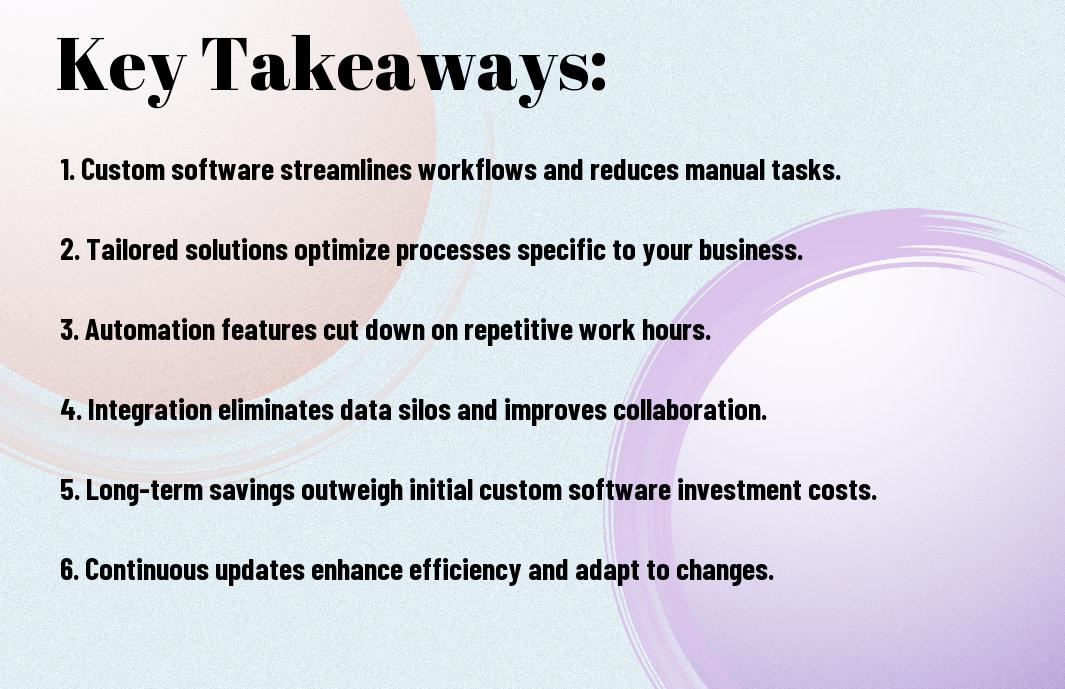
Most businesses today are constantly searching for ways to reduce operational costs while boosting efficiency. You may have heard that custom software can be a game-changer in achieving those goals. By tailoring software solutions specifically to your unique workflows, you can eliminate redundancies and streamline processes that off-the-shelf products simply can’t address. In this blog post, we will explore how investing in custom software can lead to significant savings and increased productivity for your organization.
Understanding Custom Software
The rise of digital transformation has led many organizations to explore how Optimize Processes with Custom Software Development can reshape their operations. Custom software development refers to creating software specifically tailored to meet the unique needs and objectives of your business. This approach enables you to address challenges and streamline processes in ways that off-the-shelf solutions cannot, ensuring your tools align perfectly with your workflow and operational goals.
Definition and Purpose
Any software developed exclusively for your organization’s specific requirements is known as custom software. Its main purpose is to solve unique business challenges, enhancing efficiency and effectiveness. By tailoring functionality and design to your specific needs, you can achieve a level of operational synergy that generic software often cannot provide.
Advantages Over Off-the-Shelf Solutions
Above all, custom software offers flexibility and adaptability that off-the-shelf solutions often lack. You have the ability to modify features or add new functionalities as your business evolves, ensuring your software remains relevant in a rapidly changing market environment. Additionally, custom solutions often provide enhanced security measures tailored to your organization, minimizing vulnerabilities associated with widely used software. This means you can protect sensitive data while maximizing operational efficiency.
Purpose of choosing custom software over off-the-shelf options lies in its tailored approach, allowing you to gain significant competitive advantages. The software can be specifically designed to align with your existing systems and processes, improving workflows and potentially lowering operational costs. Moreover, with custom software, you can ensure you are not bound by the limitations of standard solutions, providing you the opportunity to innovate and scale your operations effectively.

Analyzing Operational Costs
Some businesses struggle to pinpoint where their operational costs stem from, leading to inefficiencies that drain resources. A thorough analysis can help you identify these costs and uncover opportunities for savings. By assessing every aspect of your operations, from labor to materials, you can create a clearer picture of where your investments are being utilized and how they can be optimized.
Identifying Cost Drivers
Before you can effectively reduce operational costs, you need to identify the primary cost drivers in your organization. These may include labor expenses, overhead costs, and technology-related expenditures. By understanding these components, you can establish targeted strategies to mitigate unnecessary spending and improve overall efficiency.
The Role of Software in Cost Reduction
Any organization can benefit from implementing custom software solutions to streamline processes and enhance productivity. By automating routine tasks and integrating systems, you can significantly cut down on operational expenditures.
Reduction in operational costs through custom software stems from its ability to automate workflows, minimize manual errors, and enhance data management. When your software aligns with specific business needs, it not only boosts efficiency but also cuts down on training costs and implementation time. Ultimately, by investing in tailored software solutions, you position your organization to experience long-term financial benefits while streamlining daily operations.
Enhancing Efficiency with Custom Software
Once again, custom software proves to be a game-changer in boosting operational efficiency. By tailoring applications to meet your specific needs, you eliminate unnecessary tasks and streamline workflows. This leads to faster project completion and improved collaboration among team members. To explore how custom software development drives business success, consider its impact on your organization.
Streamlining Business Processes
With the right custom software, you can simplify and enhance your business processes. Automation removes manual errors, decreases processing time, and allows your team to focus on higher-value tasks. Real-time data analysis enables you to make informed decisions swiftly, promoting agility in your business operations.
Case Studies of Successful Implementation
Streamlining your operations with custom software can yield impressive results. Here are some case studies demonstrating how businesses enhanced their efficiency:
- ABC Logistics: Reduced shipping errors by 40% through a tailored tracking system.
- XYZ Manufacturing: Increased production speed by 30% by automating inventory management.
- DEF Retail: Improved customer satisfaction scores by 25% after implementing a personalized shopping experience.
- GHI Finance: Cut down processing time for transactions by 50% using an integrated financial management platform.
In addition, these case studies highlight the profound impact custom software can have on your operations. The 40% reduction in shipping errors by ABC Logistics underscores the significance of precise tracking. The 30% increase in production speed at XYZ Manufacturing showcases the potential of automating tasks. With DEF Retail’s 25% improvement in customer satisfaction, you can see the direct correlation between tailored solutions and enhanced customer experience. GHI Finance’s 50% decrease in processing time further exemplifies how custom platforms can revolutionize your business operations.
Custom Software Development Process
Despite the complexity associated with custom software development, understanding the structured process helps streamline your project and maximize its benefits.
Requirements Gathering
Any successful custom software project begins with a thorough requirements gathering phase. This step involves engaging with stakeholders to understand their specific needs, objectives, and challenges, ensuring that the software solution aligns with your business goals.
Design and Implementation
With a comprehensive understanding of your requirements, the design and implementation phase takes center stage. This is where your vision transforms into a working solution, tailored to your unique operational needs.
To effectively move from concept to reality, the design phase involves creating wireframes and prototypes that visualize the functionality and user experience of your software. Once designs are approved, the implementation phase involves actual coding, where developers translate designs into a functioning application. Throughout this phase, it’s important to maintain open communication with your team to address any issues early on. By focusing on iterative testing and feedback, you can ensure that the final product meets your expectations and drives efficiencies in your operations.

Challenges and Considerations
Many companies face challenges when considering custom software solutions. These can include the initial costs, long development timelines, and the need for ongoing maintenance and updates. It’s imperative to weigh these factors against the potential benefits, as your organization may also encounter disruption during the transition phase. Therefore, having a clear strategy and understanding of your specific requirements can help you navigate these hurdles effectively.
Potential Drawbacks
Among the potential drawbacks of custom software are higher upfront costs and the possibility of a longer development cycle compared to off-the-shelf solutions. Additionally, if the software does not align well with your business processes or future needs, it could lead to wasted resources and lost time.
Mitigating Risks
With proper planning and attention to detail, you can effectively mitigate risks associated with custom software development. This starts with a thorough analysis of your operational needs, engaging with experienced developers, and setting realistic timelines. Regular communication during the development process and collecting feedback from your team can also ensure the software meets your requirements.
The key to mitigating risks lies in your ability to conduct thorough research and choose the right development partner. Engage your stakeholders throughout the process, and set clear expectations to avoid misunderstandings down the line. Developing a robust testing phase will help you identify potential issues before the software goes live, ensuring a smoother implementation. Investing time in training your staff on the new system will further enhance its adoption and effectiveness, leading to long-term success.
Measuring Success
Keep track of how your custom software is impacting operational costs and efficiency. By establishing clear metrics, you can properly gauge the return on investment and identify areas for improvement. This ongoing evaluation will empower you to make informed decisions that align with your business goals and optimize performance.
Key Performance Indicators
One approach to assessing success is through the use of Key Performance Indicators (KPIs). These quantifiable measures provide insights into various aspects of your operations, such as productivity, cost savings, and user satisfaction. By selecting the right KPIs, you can effectively monitor the impact of your custom software and drive effectiveness in your organization.
Continuous Improvement Strategies
At the heart of any successful software implementation lies a commitment to continuous improvement. This approach involves regularly assessing your processes, gathering feedback from your team, and adapting your software solutions to better meet your needs. By fostering a culture of innovation, you enable your organization to stay agile and responsive to changing demands.
Strategies for continuous improvement involve regularly soliciting feedback from users, conducting process audits, and embracing change. By establishing a feedback loop, you invite invaluable insights from your team, enabling you to identify weaknesses and opportunities for optimization. Moreover, investing in training and development ensures that your team is equipped to leverage your software to its fullest potential. This holistic approach can create a dynamic environment that fosters sustained growth and innovation while minimizing costs.
Conclusion
Summing up, adopting custom software can significantly lower your operational costs and enhance your overall efficiency. By tailoring solutions to fit your unique business needs, you can streamline processes and reduce waste, ultimately leading to better resource management. To explore more about the impact of customized software on business growth, check out The Role of Custom Software in Accelerating Business ….