

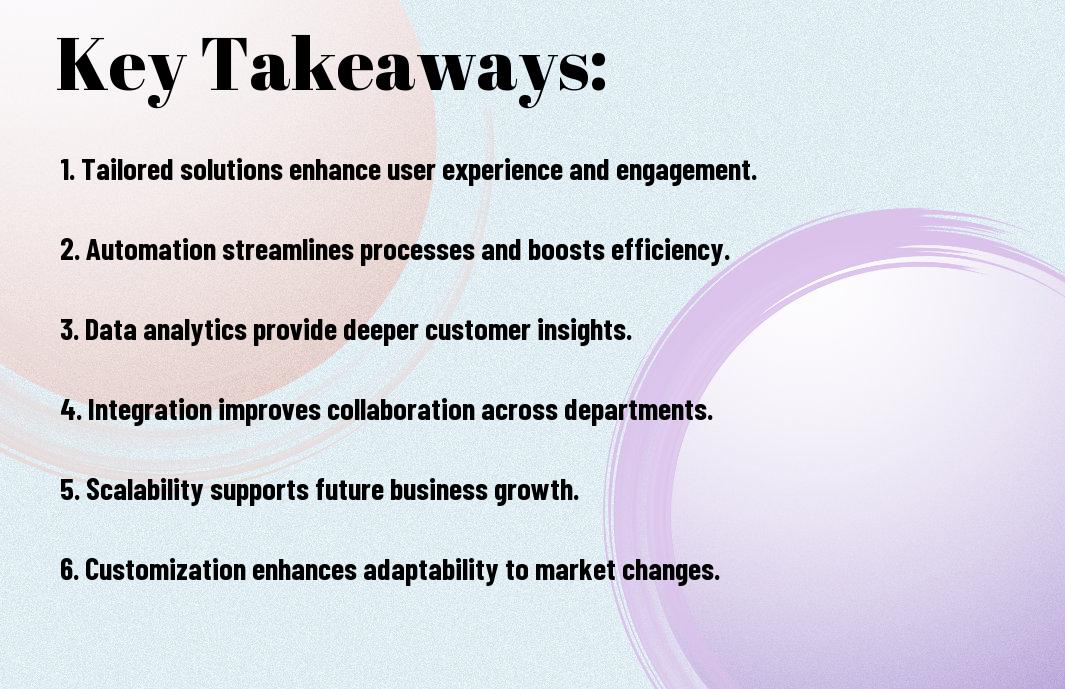
Custom software can significantly enhance your CRM strategy by providing tailored solutions that address the unique challenges of your business. With personalized features designed to meet your specific needs, you can improve customer engagement and streamline data management. This transformation allows you to harness valuable insights, automate repetitive tasks, and achieve greater efficiency. By investing in a custom CRM system, you position your business to build stronger customer relationships and drive growth in a competitive landscape.

Understanding CRM Strategies
To effectively manage customer relationships, you need a well-defined CRM strategy tailored to your business goals. This strategy outlines how you interact with customers, streamline processes, and leverage data to improve customer satisfaction and loyalty. By understanding the various components of CRM strategies, you can enhance your ability to meet customer needs and drive business growth.
What is a CRM Strategy?
Between the myriad of options available, a CRM strategy is a comprehensive plan that focuses on how to gather, manage, and utilize customer data to enhance interactions and improve business performance. It includes outlining goals, determining workflows, and employing tools that help track and analyze customer interactions.
Importance of Effective CRM
Beside improving customer relationships, effective CRM facilitates streamlined operations and stronger sales. By implementing a solid CRM strategy, you can attain a deeper understanding of your customers, which helps in meeting their expectations more effectively.
Due to the rapid changes in customer expectations and market dynamics, having an effective CRM strategy is vital for maintaining engagement and ensuring loyalty. Without it, you risk losing valuable customers to competitors who are better equipped to meet their needs. Furthermore, a poor CRM implementation can lead to wasted resources and frustration among your team. On the other hand, when done right, it significantly enhances customer satisfaction, optimizes your sales processes, and results in long-term business success. Investing in a tailored CRM strategy allows you to harness the full potential of your customer relationships.
Benefits of Custom Software
Now, embracing custom software can significantly enhance your CRM strategy by streamlining your operations and fostering better customer relationships. With tailored solutions, you can effectively address the specific challenges of your business model, resulting in increased productivity and improved customer satisfaction. Learn more about the advantages of Custom CRM Software Development to see how it can support your goals.
Tailored Solutions for Unique Business Needs
Any business faces unique challenges and requirements that off-the-shelf CRM solutions may not adequately address. Custom software allows you to develop features and functionalities that align with your processes, making it easier to manage customer interactions and data effectively.
Enhanced User Experience and Adoption
Beside providing specific functionalities, custom software enhances the overall user experience. By designing an interface that resonates with your team’s workflow, you create a system that is more intuitive and user-friendly, which ultimately drives adoption across your organization.
Adoption is a key factor in the success of any CRM implementation. A well-designed custom solution not only enhances usability but also addresses the specific pain points your team encounters when using generic software. This tailored approach makes your CRM more appealing, leading to higher user engagement and better data accuracy. When users feel comfortable with a system, they are more likely to embrace it, resulting in improved productivity and a stronger return on investment for your CRM strategy.

Integrating Custom Software with Existing Systems
Many businesses are discovering the benefits of how a CRM system can be customized for my business through custom software solutions. By integrating tailored software with your existing systems, you can enhance your CRM strategy, making it more efficient and aligned with your unique operational needs. This integration helps eliminate data silos, providing a comprehensive view of customer interactions.
Compatibility with Current Tools
Above all, ensuring that your custom software is compatible with your current tools is vital for a seamless transition. This compatibility allows your team to leverage existing resources while enhancing functionality, promoting user adoption, and minimizing disruptions in daily operations.
Streamlining Processes Across Departments
At the heart of any successful CRM strategy is the ability to streamline processes across departments. This integration of custom software enables departments to share critical customer data in real-time, improving communication and collaboration.
For instance, when your sales team accesses up-to-date customer insights through the custom software, they can tailor pitches to individual preferences, thereby increasing conversion rates. Furthermore, with automated data entry, the risk of human error diminishes significantly. This leads to enhanced efficiency across your organization, allowing you to focus more on strategic initiatives rather than mundane tasks. Ultimately, this integrated approach creates a more cohesive environment where every department can contribute to achieving common goals.
Data Management and Analysis
After implementing custom software, your business can experience a significant improvement in data management and analysis capabilities. This transformation allows for better organization, storage, and retrieval of customer information, leading to more effective CRM strategies. With enhanced analytical tools, you can uncover insights that drive growth and improve customer relationships.
Improved Data Accuracy and Accessibility
One of the key benefits of custom software is the enhancement of data accuracy and accessibility. With a tailored system, you ensure that all data inputs are validated, minimizing errors. Furthermore, easy access to precise data allows your team to respond promptly to customer inquiries and makes informed decisions based on reliable information.
Leveraging Data for Strategic Decision Making
Accessibility to organized data empowers you to leverage insights effectively for strategic decision making. This capability not only enhances operational efficiency but also enables you to identify market trends, understand customer behaviors, and develop targeted marketing strategies. By analyzing past customer interactions and behaviors, you can anticipate future needs, leading to better service delivery and increased customer loyalty. To stay competitive, incorporating this actionable intelligence into your business strategy will drive long-term success and profitability.
Scalability and Future Growth
Once again, custom software can be the key to enhancing your CRM strategy by providing scalability that aligns with your growth trajectory. As your business expands, a tailored solution ensures that your CRM can easily integrate new features and functionalities without disruption. This adaptability creates an opportunity to scale your operations seamlessly, allowing you to maintain efficiency and customer satisfaction. To dive deeper, check out Custom CRM software: A complete guide.
Adapting to Changing Business Needs
For businesses, adapting to changing needs is crucial in maintaining competitiveness. Custom software allows you to tailor CRM functionalities quickly to meet evolving customer demands, market trends, or internal management shifts. Your CRM system becomes a flexible tool that grows and changes alongside your business strategies.
Planning for Long-Term Success
Above all, having a vision for long-term success is vital. Custom software enables you to structure your CRM to support future objectives, ensuring that it grows with you. This foresight allows for a proactive approach, helping you avoid costly overhauls or replacements later on.
Planning effectively involves not only considering the immediate needs of your business but also anticipating future challenges and opportunities. By investing in a customized CRM solution, you create a supportive framework that can evolve over time. This means your system can adapt to changes in customer behavior, industry regulations, and scaling operations, ultimately leading to more effective decision-making and continued business growth. When your CRM facilitates future innovations, your focus can remain on strategic development rather than dealing with outdated systems.
Conclusion
As a reminder, investing in custom software for your business can significantly enhance your CRM strategy. By tailoring features to meet your specific needs, you can streamline processes, improve customer interactions, and ultimately boost your revenue. A personalized approach allows you to harness data effectively, resulting in deeper insights and more meaningful relationships with your clients. Embracing this technology not only positions you ahead of the competition but also empowers you to adapt quickly to changing market dynamics.