

Many organizations underestimate the impact that robust cybersecurity solutions can have on their IT support framework. By integrating advanced security measures, you can not only protect your data from increasing threats but also enhance the efficiency and reliability of your IT services. This blog post will explore how a strong cybersecurity posture can streamline your operations, reduce downtime, and foster a safer working environment. Additionally, you can find valuable insights on The most important cybersecurity frameworks in 2024 to further strengthen your strategy.

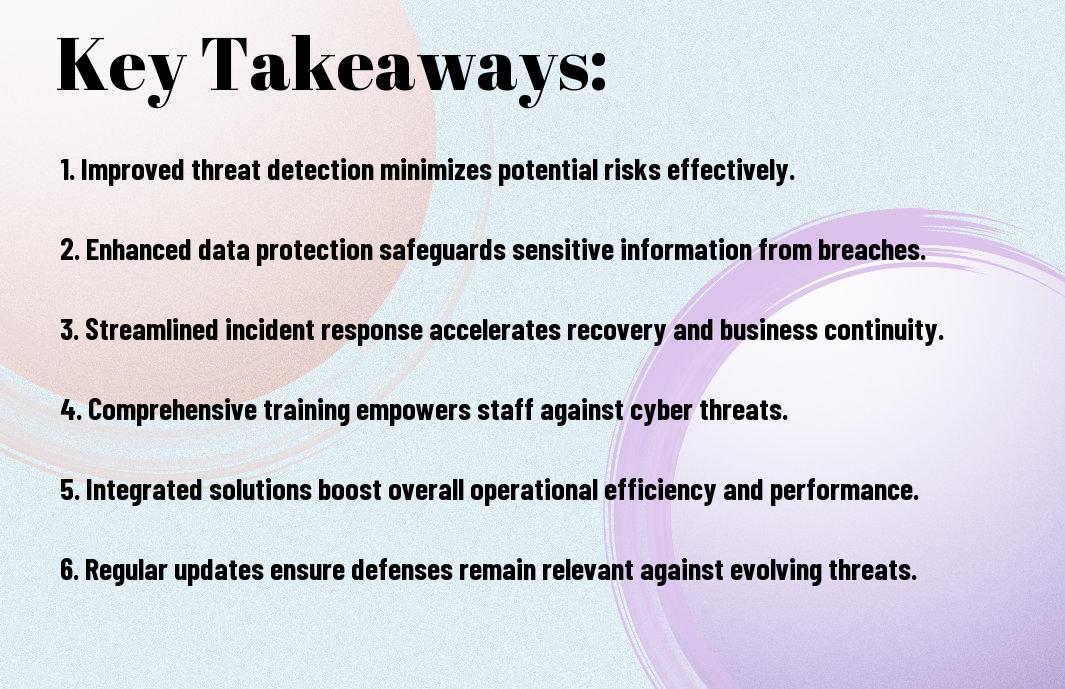
Key Takeaways:
- Integrating cybersecurity solutions into your IT support framework helps prevent data breaches and enhances overall system integrity.
- Proactive monitoring and threat detection tools can streamline IT support operations by automating alerts and responses to potential security issues.
- Adopting a comprehensive cybersecurity strategy fosters greater trust and confidence among users and clients, improving customer relations and service reputation.
Understanding Cybersecurity Solutions
Before venturing into cybersecurity solutions, it’s necessary to grasp their core significance in today’s increasingly digital landscape. These solutions are instrumental in safeguarding your IT infrastructure against escalating cyber threats.
Definition and Importance
With a focus on network protection, cybersecurity solutions encompass technologies, practices, and procedures designed to defend your systems, networks, and data from unauthorized access, damage, or theft. Their importance cannot be overstated as they protect sensitive information while ensuring business continuity.
Types of Cybersecurity Solutions
For effective protection, various cybersecurity solutions help defend against threats. These can include:
- Firewalls – Control incoming and outgoing network traffic.
- Antivirus Software – Detect and eliminate malicious software.
- Encryption – Secure data by transforming it into unreadable code.
- Intrusion Detection Systems (IDS) – Monitor networks for suspicious activities.
- Multi-Factor Authentication (MFA) – Provide an extra layer of security beyond passwords.
Knowing which solutions to implement is vital to incorporating the right mix for your organization’s needs.
| Type of Cybersecurity Solution | Key Function |
|---|---|
| Firewalls | Control network access |
| Antivirus Software | Protect against malware |
| Encryption | Safeguard sensitive data |
| Intrusion Detection Systems (IDS) | Identify suspicious activity |
| Multi-Factor Authentication (MFA) | Enhance authentication security |
Cybersecurity solutions are varied and cater to different aspects of protection. Each type plays a significant role in forming a comprehensive security strategy for your IT environment.
- Firewalls – Essential for controlling network traffic.
- Antivirus Software – Vital for detecting threats.
- Encryption – Important for securing data.
- Intrusion Detection Systems (IDS) – Critical for monitoring activity.
- Multi-Factor Authentication (MFA) – Key for enhancing access security.
Knowing the full spectrum of cybersecurity solutions ensures that you maintain robust protection against potential risks.
| Type of Cybersecurity Solution | Key Function |
|---|---|
| Firewalls | Control network access |
| Antivirus Software | Protect against malware |
| Encryption | Safeguard sensitive data |
| Intrusion Detection Systems (IDS) | Identify suspicious activity |
| Multi-Factor Authentication (MFA) | Enhance authentication security |
The Role of Cybersecurity in IT Support
If you want to maintain a robust IT support framework, integrating cybersecurity solutions is important. These solutions not only protect sensitive data from potential breaches but also enhance your overall IT infrastructure by providing a comprehensive approach to tackling vulnerabilities. By prioritizing cybersecurity, you ensure that your IT support can seamlessly handle threats and maintain operational efficiency, ultimately safeguarding your organization’s reputation and resources.
Enhancing Risk Management
On implementing effective cybersecurity measures, you can significantly enhance your risk management strategies. These solutions allow you to identify potential threats before they exploit your systems, ensuring that your organization is prepared to address vulnerabilities proactively. By doing so, you strengthen your IT support framework, allowing for more informed decision-making regarding resource allocation and prioritization of risks.
Improving Incident Response
Response planning is critical when it comes to managing security incidents effectively. A well-structured cybersecurity posture ensures that you are equipped with the necessary tools and protocols to address breaches quickly. This rapid response minimizes potential damage and reduces downtime.
Due to the increasing sophistication of cyber threats, an effective incident response plan positions you to act swiftly and decisively when issues arise. With a solid framework in place, you can mitigate risks and protect valuable data from being compromised. Additionally, implementing timely updates and training ensures that your IT team remains well-informed and ready to face emerging challenges. Overall, your responsiveness can make a significant difference in how incidents impact your organization, safeguarding your reputation and financial resources.

Integration of Cybersecurity Solutions
After incorporating robust cybersecurity solutions into your IT support framework, you’ll enhance your organization’s ability to manage threats efficiently. By understanding and implementing Cybersecurity Best Practices, you can create a cohesive environment where both IT support and security work hand in hand to mitigate risks and ensure data integrity.
Aligning IT Support with Cybersecurity
At the heart of effective IT support is the seamless alignment with your cybersecurity measures. When your IT team is educated about the importance of security protocols, you can better anticipate potential vulnerabilities and address them swiftly, fostering a culture of security awareness throughout your organization.
Tools for Seamless Integration
To achieve a successful integration of IT support and cybersecurity, leverage tools designed to facilitate communication and collaboration between both teams. Utilizing integrated platforms allows for real-time threat analysis and response, ensuring that your support framework is always informed about security updates and necessary actions.
And by employing solutions like security information and event management (SIEM) systems, endpoint detection and response (EDR), and automated threat intelligence, you empower your IT support team to respond swiftly to potential threats. These tools not only enhance your overall security posture but also ensure that critical vulnerabilities are addressed promptly, keeping your organization safe from harm.
Benefits of Enhanced IT Support Framework
All organizations experience challenges in managing their IT environments. By enhancing your IT support framework with robust cybersecurity solutions, you can greatly improve your operational efficiency, ensure compliance, and protect valuable data. These benefits not only bolster your organization’s reputation but also foster a more trustworthy relationship with your clients and stakeholders.
Improved System Resilience
System resilience is paramount in today’s digital landscape. By integrating cybersecurity measures into your IT support framework, you strengthen your systems against potential breaches, reducing the risk of downtime and ensuring that your operations run smoothly. An enhanced framework allows you to quickly recover from incidents, protecting your organization’s reputation and maintaining client trust.
Cost-Effectiveness and Resource Optimization
With the right cybersecurity solutions, you can streamline your IT support operations, leading to better resource allocation and significant cost savings. By preventing security incidents, you avoid the high costs associated with data breaches, system failures, and lost productivity.
Another key aspect of cost-effectiveness and resource optimization pertains to efficient incident response. By implementing proactive cybersecurity measures, you reduce the frequency and severity of potential issues, which saves time and resources. Investing in training your staff to recognize threats enhances overall awareness, making your organization less vulnerable to attacks. In turn, this can mean fewer interruptions and less investment needed for crisis management, ultimately driving cost savings across your operations.
Challenges in Implementing Cybersecurity Solutions
Despite the growing necessity for robust cybersecurity measures, organizations often struggle with effectively implementing these solutions. Factors such as budget constraints, lack of skilled personnel, and resistance to change can hinder your efforts to strengthen your IT support framework. Additionally, the rapidly evolving threat landscape requires constant adaptation and updates, which can overwhelm existing resources and processes.
Common Obstacles
By identifying common obstacles, you can better understand the challenges that may arise when implementing cybersecurity solutions. Issues like inadequate training for your staff, limited budgets, and insufficient integration with existing IT frameworks often prevent organizations from realizing the full benefits of cybersecurity measures. Furthermore, the complexity of managing multiple solutions can lead to operational inefficiencies, leaving you exposed to potential threats.
Strategies for Overcoming Challenges
The best way to overcome these challenges is through a strategic approach. Prioritize your cybersecurity needs and establish a clear roadmap to guide your implementation process. By investing in regular training for your team, allocating budget effectively, and fostering a culture of collaboration and adaptability, you can create an environment where cybersecurity becomes an integral part of your IT support framework.
Obstacles in implementing cybersecurity solutions can be significant, but with the right strategies, you can navigate them successfully. Begin by conducting a thorough assessment of your current IT environment to identify areas of vulnerability. Focus on building a change-friendly culture within your organization that emphasizes the importance of security protocols. Actively invest in employee training and awareness programs to enhance your team’s skills and understanding, ultimately allowing them to adapt to new technologies and practices. By integrating feedback from your staff and using automation tools where possible, you can streamline processes and reduce the burden on your team, ensuring that cybersecurity measures are not just an afterthought, but a fundamental component of your IT strategy.
Future Trends in IT Support and Cybersecurity
To ensure robust protection and seamless operations, the future of IT support and cybersecurity will increasingly integrate advanced technologies, machine learning, and predictive analytics. As cyber threats become more sophisticated, staying ahead requires a proactive approach, leveraging innovative tools to protect your systems and data. By embracing these trends, you can enhance your IT support framework, bolster your defenses, and make informed decisions for your organization’s security.
Emerging Technologies
Along with the growing reliance on cloud computing and artificial intelligence, emerging technologies such as blockchain and quantum computing are set to redefine cybersecurity protocols. These tools not only improve data protection but also streamline IT support processes, enabling your organization to respond effectively to evolving threats.
The Evolving Cyber Threat Landscape
On your journey towards enhanced cybersecurity, you need to understand the rapidly changing nature of the cyber threat landscape. With increasing sophistication of attacks, your organization faces threats ranging from phishing and ransomware to advanced persistent threats (APTs) that target sensitive data. Staying informed about these trends and employing adaptive security measures will significantly reduce your vulnerabilities and empower your IT support framework to respond effectively.
Landscape analysis reveals a slew of emerging challenges you cannot afford to overlook. Cybercriminals are becoming more adept, utilizing artificial intelligence to automate attacks and exploit system weaknesses. Additionally, the rise of the Internet of Things (IoT) has broadened the attack surface, creating new entry points for threats. Your defense strategies must therefore adapt and incorporate real-time monitoring and incident response plans to stay ahead of these evolving threats.
Final Words
Presently, integrating robust cybersecurity solutions into your IT support framework significantly strengthens your defense against potential threats. By adopting proactive measures, you not only protect sensitive data but also enhance operational efficiency and maintain user trust. Investing in advanced cybersecurity tools empowers you to identify vulnerabilities and respond to incidents swiftly, ensuring your IT infrastructure remains resilient. Ultimately, prioritizing cybersecurity enables you to focus on growth and innovation, knowing that your systems and information are safeguarded from evolving cyber risks.
FAQ
Q: How do cybersecurity solutions improve the overall efficiency of an IT support framework?
A: Cybersecurity solutions enhance efficiency by automating threat detection and response processes, which allows IT teams to focus on other critical tasks. By integrating advanced security measures such as intrusion detection systems and endpoint protection, organizations can minimize the time spent on manual monitoring and incident management. This leads to faster issue resolution, better utilization of resources, and enhanced productivity across the IT support landscape.
Q: What role do cybersecurity solutions play in risk management within an IT support framework?
A: Cybersecurity solutions play a significant role in risk management by providing tools that identify, assess, and mitigate potential threats. They allow for continuous monitoring of the IT environment to spot vulnerabilities before they can be exploited. This proactive approach to security helps IT teams prioritize risks based on their potential impact, enabling them to allocate resources effectively and implement appropriate safeguards to protect sensitive data and systems.
Q: How can integrating cybersecurity solutions enhance compliance within an IT support framework?
A: Integrating cybersecurity solutions assists in compliance by automating many necessary security protocols and reporting requirements associated with regulations such as GDPR, HIPAA, or PCI DSS. These solutions can help ensure that data protection measures, access controls, and incident response plans are not only established but also consistently monitored. This not only aids in maintaining compliance but also prepares organizations for audits, ensuring they can demonstrate adherence to regulatory standards effectively.