

With the increasing reliance on digital solutions, evaluating whether you are truly maximizing ROI with custom software is vital. Custom software can streamline operations, enhance productivity, and foster innovation, but without proper implementation, you risk inefficiency and wastage of valuable resources. By analyzing your software’s performance in alignment with your business goals, you can harness its full potential. For best practices and strategies to ensure effectiveness, consider reading our guide on Maximizing ROI with Custom Software: Essential Do’s & ….
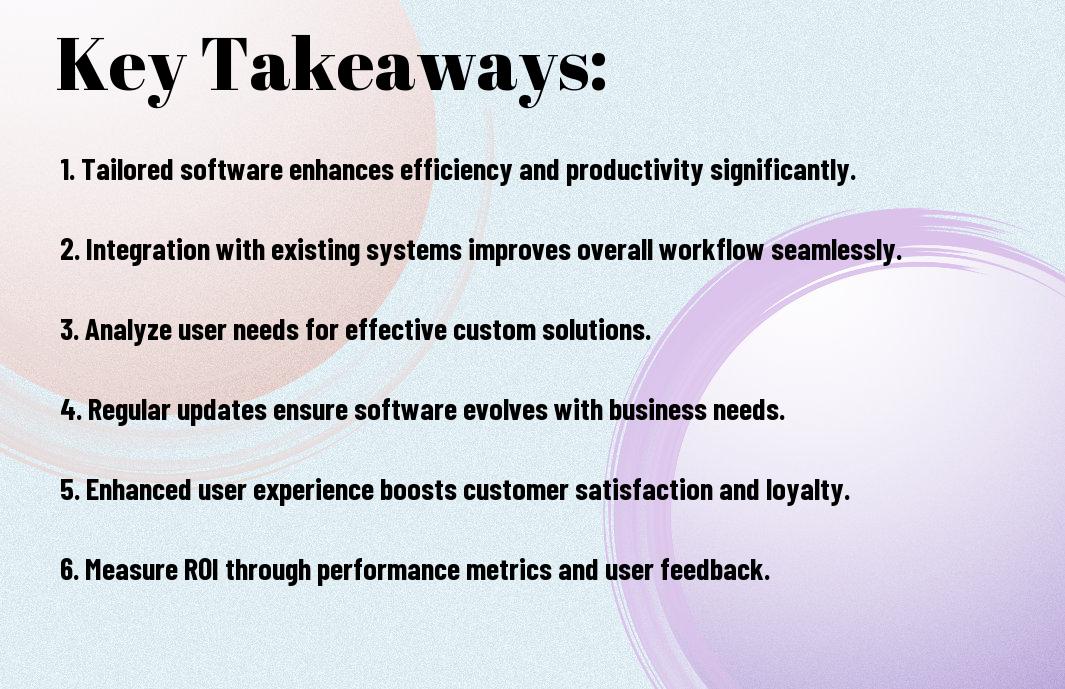
Understanding ROI in Software Development
The concept of Return on Investment (ROI) in software development refers to the benefits you obtain from your investment in custom software solutions compared to their costs. It is crucial to grasp the various aspects of ROI to ensure that your software initiatives are cost-effective and align with your business goals.
Defining ROI
Between the initial costs of developing custom software and the long-term benefits it brings, ROI is calculated to determine the efficiency of your investment. This metric provides insight into whether your software development costs are justified by the financial gains or productivity improvements.
Importance of ROI in Business Decisions
Across industries, understanding ROI helps you make informed choices about resource allocation, budgeting, and strategic planning. With a strong grasp of ROI, you can evaluate the potential impact of new software projects on your overall business performance.
Development decisions grounded in ROI analysis enable you to identify projects that offer the best potential returns. By analyzing financial gains and the costs incurred, you wield a powerful tool for prioritization. This insight allows you to steer your efforts towards projects that enhance your operational efficiency and drive long-term growth, avoiding unnecessary expenditures on unproven solutions. Ultimately, understanding ROI fosters a data-driven approach that can significantly enhance profitability and sustainable success.
Advantages of Custom Software
It’s crucial to understand the advantages of custom software for your business. Custom solutions can significantly enhance your operations, giving you a competitive edge. With tailored features and functionalities, you can streamline your processes, improve customer experiences, and ultimately boost your bottom line. For more insights on staying ahead in today’s business landscape, check out Maximizing ROI with Custom Software Solutions.
Tailored Solutions for Specific Needs
Below, you will learn how custom software addresses the unique requirements of your business. Unlike off-the-shelf solutions, custom software is designed specifically for your processes, ensuring that every function aligns perfectly with your organizational goals. This level of personalization allows you to eliminate unnecessary features that don’t serve your needs, saving you time and resources.
Enhanced Efficiency and Productivity
The implementation of custom software solutions can lead to significant improvements in your organization’s efficiency and productivity. By integrating tailored tools and automating repetitive tasks, your team can focus on more strategic initiatives that contribute to growth.
A custom software solution delivers significant efficiencies by automating manual processes and eliminating redundancies. This means your team can accomplish more within the same timeframe, enhancing overall productivity. By designing systems that streamline workflows and increase communication, you can expect to see an uptick in both speed and quality of work. Investing in custom software truly maximizes your potential for success in an ever-evolving marketplace.
Identifying Business Needs
Your journey towards maximizing ROI with custom software begins with identifying your specific business needs. Understanding these needs ensures that the software you invest in aligns with your goals and enhances operational efficiency. Take time to analyze current processes, gather feedback, and pinpoint areas where software solutions can drive improvement. This foundational work sets the stage for selecting or developing software that is effective and supportive of your business growth.
Conducting a Needs Assessment
After you have established an outline of your goals, it’s time to conduct a needs assessment. This assessment involves collecting data from various stakeholders within your organization to identify pain points, workflow inefficiencies, and potential opportunities. By engaging team members across departments, you can gain insights that help shape the software solution tailored to your needs, ensuring it addresses the right challenges and maximizes value.
Prioritizing Key Features
On identifying your needs, it’s vital to prioritize the key features of your custom software solution. Focus on those that will directly influence your productivity and deliver the highest return. This process involves evaluating different functionalities against your objectives and budget. Key features may include:
- User-friendly Interface
- Scalability
- Real-time Analytics
- Integration Capabilities
- Customization Options
- Security Features
Recognizing the significance of these features will help you to make informed decisions that will enhance your business operations and overall ROI.
Indeed, prioritizing key features is about understanding which functionalities will provide the most impactful returns. By carefully evaluating options, you can develop a list of vital features that address your specific requirements and challenges:
- Intuitive Dashboard
- Mobile Accessibility
- Automated Workflow
- Customer Relationship Management (CRM)
- Enhanced Reporting Tools
- Support and Maintenance
Recognizing how these key features contribute to your business efficiency allows you to maximize the benefits of your custom software investment and ensure that it aligns with your strategic objectives.

Measuring ROI for Custom Software
Now, understanding how to measure the ROI of your custom software is necessary for ensuring that your investment pays off. You need to assess both quantitative and qualitative factors that influence your business performance. For valuable insights, check out Maximizing ROI with Custom Software Over Off-the-Shelf … to guide you through this evaluation process.
Short-term vs. Long-term ROI
Along your journey with custom software, it’s important to distinguish between short-term and long-term ROI. While short-term gains may be seen in efficiency improvements or cost reductions, the long-term benefits can include increased customer satisfaction and sustained competitive advantages, ultimately enhancing your brand’s reputation and market position.
Metrics and KPIs
Across the spectrum of your custom software’s performance, defining clear metrics and KPIs is necessary for tracking its ROI. By aligning these metrics with your business goals, you can effectively measure improvements in productivity, revenue growth, and customer engagement.
At the core of measuring ROI are the metrics and KPIs you establish for your custom software. Focus on user adoption rates, time savings, and cost-efficiency to gauge the success of your investment. A notable improvement in these areas indicates a positive outcome. Additionally, consider customer feedback to understand satisfaction levels, as they directly impact long-term loyalty and sales. Ultimately, consistent monitoring of these factors will help you adjust your strategy and maximize your returns.

Case Studies of Successful Custom Software Implementation
Keep exploring how businesses like yours have effectively utilized custom software solutions to maximize their returns. Here are some compelling case studies:
- Retailer X: Increased inventory turnover by 30%, leading to a revenue boost of $500,000 in one year after implementing a custom inventory management system.
- Transport Company Y: Enhanced routing efficiency, cutting fuel costs by 25%, saving $150,000 annually with a tailored logistics application.
- Healthcare Provider Z: Improved patient management operations, reducing appointment no-shows by 40% and increasing overall patient satisfaction scores by 20%.
Industry Examples
By examining various sectors, you can see the versatility of custom software. For instance, healthcare organizations leverage patient management systems to enhance care delivery. In finance, firms utilize tailored reporting tools to streamline compliance. Retailers deploy bespoke e-commerce platforms that cater specifically to their customer base, demonstrating the adaptability of custom solutions.
Lessons Learned
About your journey in implementing custom software, you will discover what works and what doesn’t. Engaging stakeholders early on can pave the way to smoother transitions and heightened user adoption rates. Tailoring features to address specific needs will enhance effectiveness and encourage use, leading to better performance outcomes.
In fact, learning from others’ experiences can significantly shape your approach. For instance, monitoring project timelines and budgets can reveal inefficiencies before they escalate. Additionally, prioritizing user training ensures that your team is well-equipped to maximize software capabilities. Reflecting on these insights can propel your investment in custom software towards obtaining optimal results.
Common Pitfalls to Avoid
To maximize your return on investment with custom software, you must steer clear of common pitfalls that can derail your project. Identifying and addressing these issues early on will not only save you time and resources but also enhance the overall effectiveness of your software solution.
Poor Planning and Scope Creep
Before begining on your custom software project, it’s necessary to have a clear plan in place. Failing to define the project scope can lead to scope creep, where additional features and changes are added without proper assessment, ultimately resulting in project delays and budget overruns.
Ignoring User Feedback
Below the surface, ignoring user feedback can severely hinder the success of your custom software. User insights provide valuable information about the software’s effectiveness and areas for improvement; without this input, your solution may miss the mark entirely.
Common pitfalls arise when you overlook the importance of engaging with your users during the development process. Failing to solicit feedback can result in a product that does not meet user needs, leading to low adoption rates and underwhelming performance. Actively seeking user input not only helps identify issues early but also fosters ownership and support for the software, ultimately contributing to higher satisfaction and ROI.
Final Words
Considering all points, it’s clear that maximizing your return on investment with custom software requires a strategic approach tailored to your specific needs. By assessing your current processes, investing in user-friendly solutions, and continually evaluating the software’s impact on productivity and efficiency, you can significantly enhance your business outcomes. Embracing this initiative not only streamlines operations but also positions you ahead of competitors who rely solely on off-the-shelf solutions. Make informed decisions to ensure that your custom software truly serves your goals.